
Office Hours
Office Hours. 1-1 Meetings. Group Conversations. For WashU students only.

Letters of Recommendation

Diasporic Poetics
In this course, we'll explore literary networks created by African and Black diasporic poets as they connect, write, and move across the globe. In literary and cultural studies, the idea of diaspora has gained significant recognition. Some proponents of diaspora see it as a versatile framework for understanding transnational migrations and cultural impacts that aren't bound by restrictive nation-based frameworks. However, other scholars are concerned that it may elude the political and historical frameworks offered to us by nation-based and ethnic-studies scholarship. We will critically engage with both of these discourses by focusing on the works of poets from Africa and the diaspora, such as Suzanne and Aime Césaire, John Pepper Clark, Audre Lorde, Derek Walcott, Kofi Awooner, and Linton Kwesi Johnson. To deepen our understanding of global poetics, diaspora, postcolonialism, and transnationalism, we'll study the writings of scholars like Édouard Glissant, Ngugi wa Thiong'o, and Jahan Ramazani. Throughout, we will aim to discern how these poets have constructed a network of poetic practices that transcended boundaries and influenced literary culture.
African Literature and the Diaspora
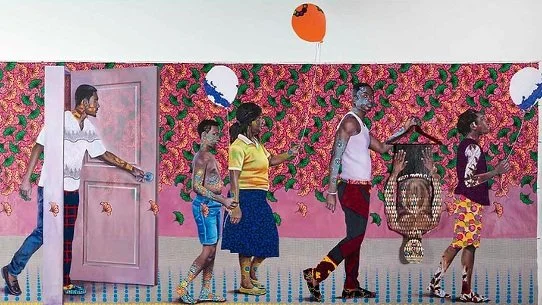
This course takes a transnational and comparative approach to geographies, literatures, and cultures of Africa and the Black diaspora. We will consider the intersection and overlap between a variety of Black diasporic cultures and literatures in places such as Ghana, the United Kingdom, South Africa, Indonesia, Germany, and Barbados. By doing so, we'll begin to gesture towards what Brent Hayes Edwards has called "the practice of diaspora." One part of this course is both a survey of Black diasporic literature and an introduction to ongoing debates about what constitutes Black diasporic literature. We will study a variety of literary genres and ask how formal and stylistic conventions, as well as shifting sociohistorical and sociopolitical circumstances, have shaped conceptions of Black diasporic literature. The second part will encourage us to think generatively about how we might use the concept and practice of diaspora as an organizing model for Black literary production on a global scale. Assignments will include a group curated glossary of key terms and an annotated bibliography. We will also work in teams to produce diasporic digital storytelling projects as part of the final. This course may fulfill the global or minority literatures requirement for students who declare an English major in the fall 2021 semester and beyond.
The Practice of Diaspora

The English Major in the World: Skills, Careers, and Futures
The English Major in the World: Skills, Careers, and Futures
What does literary study do beyond the university classroom? What do English majors learn to do, and where might those skills take them? This course treats the English major as a distinctive way of reading, thinking, and making meaning in the world. We will investigate the skills English majors learn—reading, interpretation, research, argument, writing, cultural analysis, storytelling, and attention to language and audience—and ask how those skills are implemented when they leave the classroom.
We will read writers and thinkers including Toni Morrison, Joseph Oduro-Frimpong, Eve L. Ewing, and Michelle Chihara, who offer perspectives on literature, culture, work, and the public life of the humanities. Alongside these readings, students will work directly with a community partner in St. Louis on a real project.
Students will leave the course with a clear account of their own skills, professional materials they can use —including a résumé, cover letter, and portfolio—and real-world internship experience they can put on a CV or résumé. Along the way, the course invites students to explore, experiment, and imagine several possible futures, holding together practical questions—What can I do with an English major? How do I communicate my education to others?—and larger ones: What is literary study for, and what can it make possible in the world?
Global Poetics
This class sets course through 21st century poetry written and translated into English, focusing entirely on how poets write across cultures. Certain topics will seem particularly modern: eco-poetics, #BlackLivesMatter, and social media. Other topics will raise important and enduring questions: How do poets influence other poets? How do poems speak to one another? What can poetry learn from other arts? And what is a poem anyways? This course will introduce students to the practice of reading and writing about contemporary works of poetry in order to gain a keen understanding of how our own social, political, and cultural locations influence our readings of texts, and how diverse voices and experiences resonate cross-culturally. We'll discuss the boundaries and borders of poetry, what it means to think of poetry as a representation of our society and of our world, and how poetry reflects and speaks to our current political, economic, and social realities. We will also analyze the forms and modes that define contemporary poetry, and how these forms and modes are changed and adapted by poets of different races, genders, sexualities, nationalities, backgrounds, lineages, and traditions. In the first half of the semester, we will work on a small-scale version of the primary prose genre of contemporary poetry criticism-the book review. In the second half of the semester, our writing will culminate in a final paper dealing with poetry and various aspects of globalization.

Global Poetics
Undergraduate

African Little Magazines
In this course, students will explore the history and significance of little magazines in the Black diaspora. Little magazines have been platforms for showcasing emerging literary voices, shaping literary movements, and launching the careers of many writers. We will begin our journey in the 1940s and trace the evolution of these magazines up to the present day. Through readings of important defunct, influential, and established magazines, as well as newly formed magazines in print or on the web, we will examine the role of little magazines in promoting literary culture and shaping society. We will read and analyze both English-language magazines and translated works. Some magazines will reflect a particular avant-garde aesthetic, while others will focus on issues of third-world solidarity and revolution. Throughout the course, we will work together to create a zine and participate in a group-curated digital exhibition. This course may fulfill the global or minority literatures requirement for students who declare an English major in the fall 2021 semester and beyond. This course fulfills the 20th Century historical requirement. This course counts as an elective towards the Publishing Concentration.
African Digital Humanities
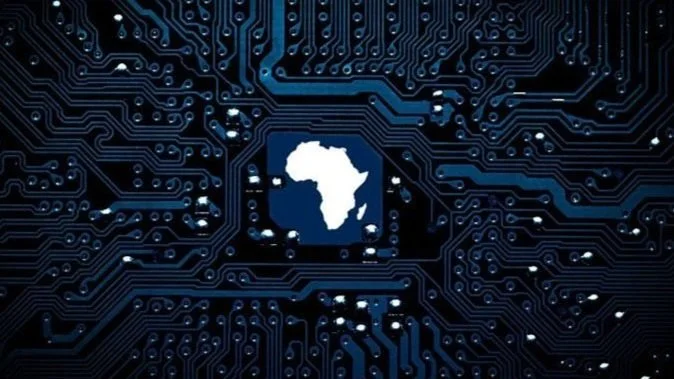
In this course, we'll be bridging two interdisciplinary fields- the digital humanities and Black diaspora studies- in order to examine how technology has mediated new engagements with the Black Atlantic. Following the concept of "juxtaposition," what Kelly Baker Josephs and Roopika Risam see as the intersection "of disciplines, cultures, and methods" (The Digital Black Atlantic 2021), this course will consist of traditional class discussion, writing assignments, and lab days that bridge theory, method, and application. Ultimately, we will aim to discover how scholars utilize digital tools to engage with and better understand the cultures, histories, and literatures of the Black diaspora. We will examine a broad range of scholarship, such as Brittle Paper, an online literary magazine, "Digital Nollywood," "The Global Poetics Project," and "Archive of Languages and Oral Resources of Africa," which are digital archives and repositories, "Migration Stories: Africans in Midwestern Communities," a digital storytelling initiative, and the web series "Left of Black," which is a multimedia source. Throughout the semester, students will learn to work with DH tools like Voyant and Omeka, will conduct text analysis, develop maps and network models, and learn how to utilize and build databases. Readings and classwork will be supplemented by practicums, and a small-scale final DH project will serve as an entry-point into both the public and digital humanities.
The Digital Black Atlantic